

October 29th 2026
Drive Carefully: Your Guide to a Safer Australian RV Adventure
One of the greatest joys of exploring Australia by motorhome is the freedom to discover coastal roads, outback landscapes, regional towns and hidden gems at your own pace. But Australia's roads can be very different from those in other parts of the world. Long distances, changing weather conditions, wildlife and remote driving environments all require a little extra planning and care. Driving carefully isn't just about getting from A to B. It's about making your journey safer, more enjoyable and more rewarding, while helping to protect Australia's unique wildlife and natural environments along the way.
Australia's Roads Are Different
Australia is a vast country, and many popular road trip destinations are separated by long stretches of road. What may look like a short drive on a map can take much longer than expected, particularly if you're travelling through regional or remote areas.
Before setting out each day:
Plan your route and destination.
Check local road conditions and weather forecasts.
Review any road closures, bushfire alerts or travel warnings.
Allow extra time for rest breaks, sightseeing and unexpected delays.
The best road trips are rarely the fastest ones. Slowing down and allowing plenty of time often leads to the most memorable experiences.
Take Your Time and Enjoy the Journey
It's tempting to fit as much as possible into your itinerary, but Australia's best experiences are often found when you spend longer in each destination rather than rushing to the next stop.
Consider adopting a "slow travel" approach:
Stay an extra night in regional towns.
Explore local walking trails and attractions.
Take time to connect with local communities and businesses.
Walk or cycle once you've reached your destination instead of driving everywhere. Less time on the road can mean more time enjoying the places you've travelled so far to see.
Be Aware of Wildlife on the Roads
Australia's wildlife is one of the highlights of any road trip, but it can also present one of the biggest driving hazards. Kangaroos, wallabies, wombats and other native animals are most active around sunrise and sunset. This means the risk of wildlife collisions increases significantly during dawn and dusk.
Our Top Tip: Avoid Driving at Dawn and Dusk
Where possible:
Plan to arrive at your destination before sunset.
Delay departures until after sunrise.
Stay alert in regional, rural and bushland areas.
Slow down when you see wildlife warning signs. If you do encounter wildlife near the road, reduce your speed safely and remain alert, as animals often travel in groups.
Drive to the Conditions
Road conditions can change quickly across Australia. Depending on where your adventure takes you, you may encounter:
Heavy rain and reduced visibility.
Gravel or unsealed roads.
Dust and strong winds.
Narrow regional roads.
Increased wildlife activity. Always adjust your speed to suit the conditions, regardless of the posted speed limit. Extra caution is especially important when travelling in unfamiliar areas.
Understand Your RV
Motorhomes and campervans handle differently to passenger vehicles. They are generally taller, longer and heavier, which affects braking, turning and parking.
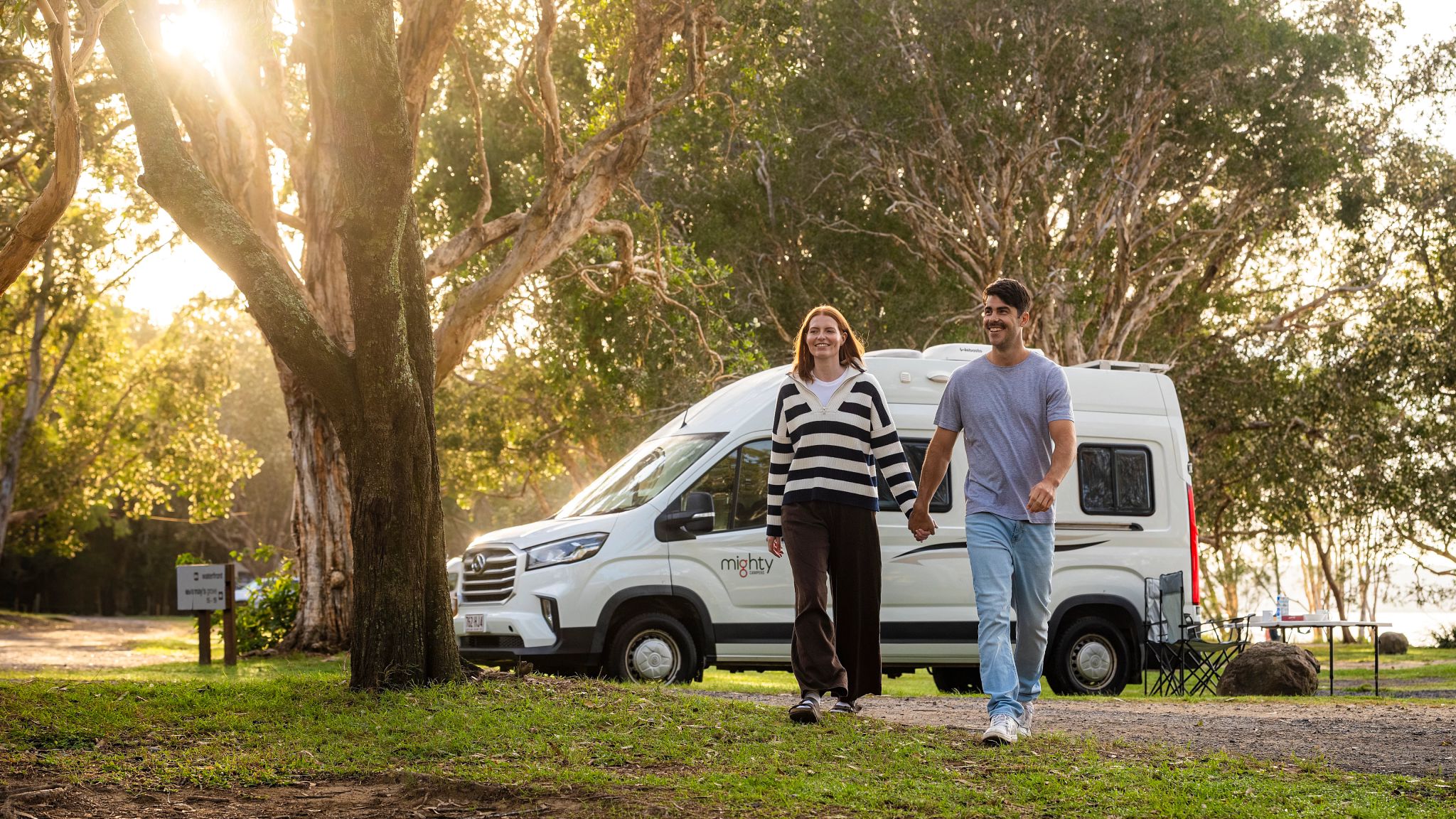
Before hitting the road:
Familiarise yourself with the vehicle dimensions.
Allow extra stopping distance.
Take corners more slowly.
Be mindful of overhead clearances.
Use designated parking areas where available. Driving confidently starts with understanding your vehicle's capabilities and limitations.
Watch for Driver Fatigue
Fatigue is a serious risk on Australian roads, particularly during long-distance travel. Signs of fatigue can include:
Difficulty concentrating.
Frequent yawning.
Wandering thoughts.
Delayed reactions.
To help stay alert:
Take regular breaks every two hours.
Swap drivers where possible.
Stay hydrated.
Avoid driving when tired. If you're feeling fatigued, stop and rest. No destination is worth risking your safety.
Stay on Designated Roads and Tracks
While Australia's remote landscapes can be incredibly tempting to explore, driving off designated roads and tracks can damage sensitive environments and wildlife habitats.
Staying on approved roads helps:
Protect native vegetation.
Reduce impacts on wildlife habitats.
Prevent erosion and land degradation.
Keep travellers safe. Respect local signage and access restrictions wherever you travel.
Know What to Do If You See Injured Wildlife
Despite everyone's best efforts, wildlife incidents can still occur. If you encounter injured wildlife:
Pull over safely if possible.
Ensure your own safety first.
Contact a local wildlife rescue organisation or emergency wildlife service.
Follow advice from trained responders.
Acting responsibly can make a significant difference to an animal's chances of survival.
Travel Safely, Travel Respectfully
Every Australian road trip is an opportunity to experience spectacular scenery, encounter unique wildlife and create unforgettable memories. By planning ahead, allowing extra time, driving to the conditions and avoiding dawn and dusk travel where possible, you can help make the journey safer for yourself, your fellow travellers and the wildlife that calls Australia home. The best Australian adventures aren't measured by how many kilometres you cover, but by the experiences you have along the way. Slow down, stay alert and enjoy the journey.
Acknowledgement of Country
As we travel across Australia, we acknowledge the Traditional Custodians of the lands and waters on which we journey. We pay our respects to Elders past and present and recognise the continuing connection of Aboriginal and Torres Strait Islander Peoples to Country.
